Bidar: A Craft Made From Its Own Fort
A Bahmani-era capital in Karnataka's far northeast, best known for a fort, a GI-tagged metal craft that genuinely couldn't exist anywhere else, and blackbucks roaming 18km outside town.
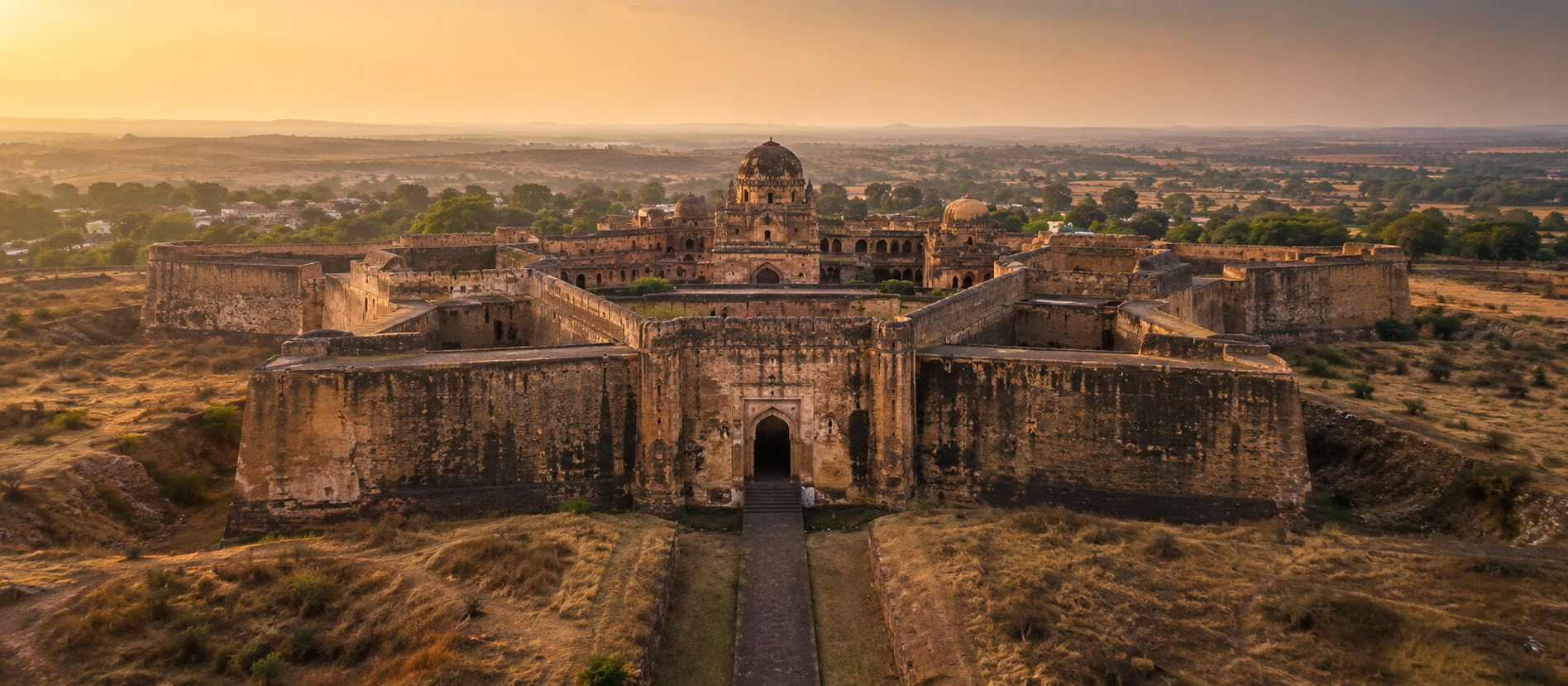
Bidar
Is Bidar Worth the Trip?
Bidar rewards travellers genuinely interested in Deccan Islamic history and craft heritage over classic temple-and-hill-station sightseeing. It was the Bahmani Sultanate's capital from 1430, later the seat of the Barid Shahi dynasty, and today holds one of India's more underrated forts alongside Bidriware — a metalwork craft that literally cannot be replicated outside this specific soil. Sitting in Karnataka's far northeastern corner, it's genuinely closer to Hyderabad than to Bangalore, worth factoring into how you plan a visit.
Bidar Fort & the Bahmani Legacy
Bidar became the Bahmani Sultanate's capital in 1430, when Sultan Ahmad Shah Wali moved it here from Gulbarga. The fort itself, likely originating under the Western Chalukyas and passed through the Yadavas and Kakatiyas before the Bahmanis rebuilt it, is a genuinely serious piece of medieval military architecture — 1.3km around, 37 bastions, and a double-moat defence system.
Bidar Fort
30-foot outer walls, the Gumbaz Darwaza entrance in Indo-Islamic style, and interior palaces including the tile-decorated Rangin Mahal and the Tarkash Mahal, built for the royal women.
Mahmud Gawan Madrasa
Built in 1472 by the Bahmani prime minister as a residential university with a 3,000-book library — genuinely one of India's finest surviving examples of Persian-style Islamic architecture, later used as Aurangzeb's military barracks.
Barid Shahi Tombs
A 55-acre garden of royal tombs from the Barid Shahi dynasty, including Ali Barid, Qasim Barid, and Chaand Sultana — a quieter, less-visited complex than the Bahmani tombs at Ashtur.
Chaubara
A 71-foot cylindrical watchtower with a winding internal staircase, offering panoramic views over the old town from the top.
Bidriware — the Craft the Fort Itself Makes Possible
This isn't a craft that's merely named after Bidar — it genuinely couldn't exist anywhere else. Bidriware's signature deep-black finish comes from a paste made using soil found specifically in the shaded, unlit corners of Bidar Fort, mixed with ammonium chloride. That particular soil's oxidizing properties turn a zinc-copper alloy jet black while leaving inlaid silver untouched, creating the craft's distinctive contrast.
Bahmani Origins
Developed under Sultan Ahmad Shah Bahamani (1422-1436), who set up a dedicated training centre for Bidri artisans in Bidar — a craft with a genuine royal patronage history, not a modern invention.
GI-Tagged Since 2006
The Geographical Indication tag legally restricts genuine Bidriware production to Bidar district — protecting both the craft's authenticity and the artisans still practising techniques passed down for generations.
Where to Stay
Blackbuck Resort — 18km outside the city
Set between the Honnikeri Reserve Forest and Vilaspur Lake, offering jeep safaris for blackbuck sightings, coracle rides, nature walks, and bonfire evenings. Worth setting the right expectation: this isn't deep wilderness — the blackbucks live in a relatively small grassland close to nearby industrial land, and sightings, while common, aren't guaranteed on every safari. Guests consistently praise the food, staff, and the deliberately disconnected, no-WiFi character of the property.
View Blackbuck Resort