Chikmagalur: Where Seven Smuggled Beans Started an Industry
The birthplace of coffee in India, Karnataka's highest peak, and a cave shrine that's belonged to two faiths at once for centuries — genuinely one of Karnataka's most layered hill towns.
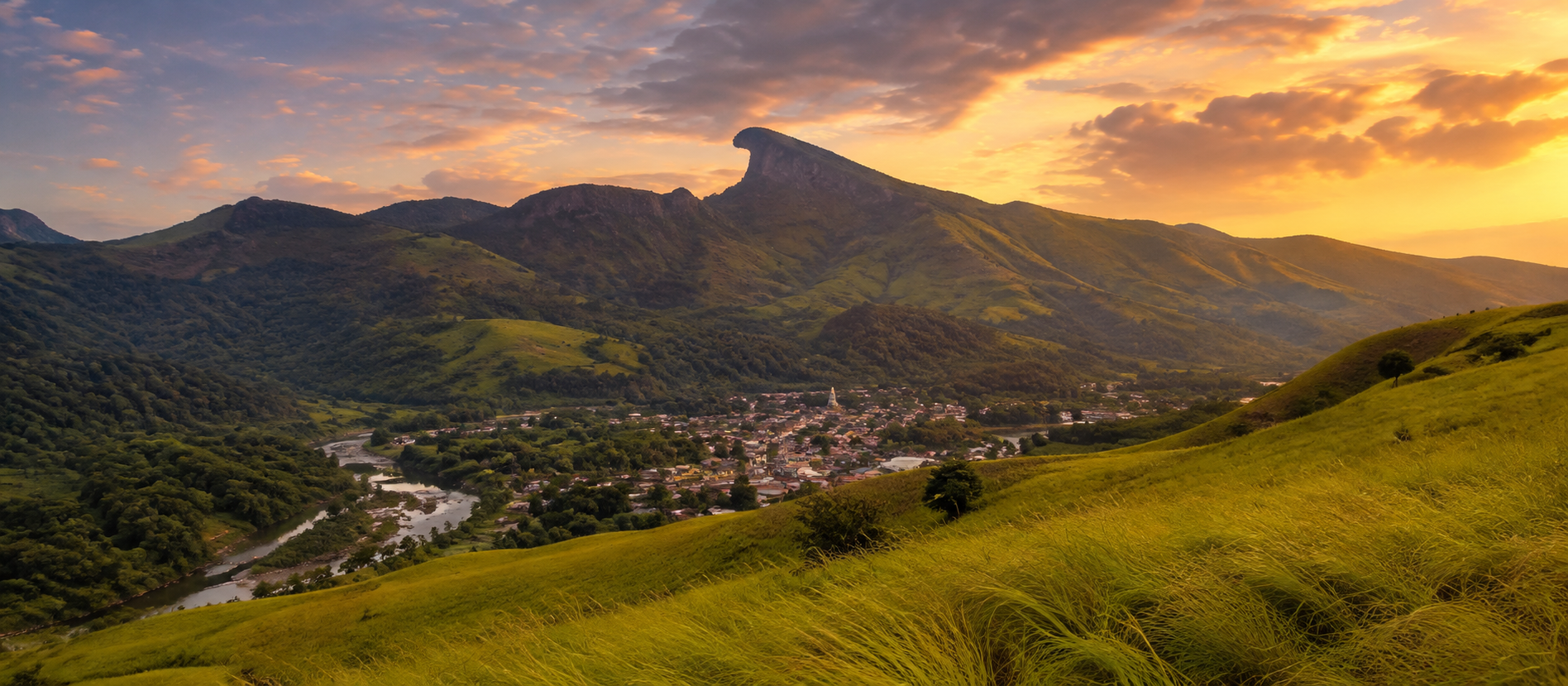
Chikmagalur
About This Destination
Chikmagalur is a Western Ghats hill town regarded as the birthplace of coffee cultivation in India, and home to Mullayanagiri, Karnataka's highest peak. Beyond the coffee estates and misty viewpoints that draw most visitors, the district holds two genuinely distinctive stories: a 17th-century smuggling legend that changed India's relationship with a beverage, and a mountain-top shrine that has belonged to two faiths simultaneously for generations.
The Birthplace of Indian Coffee
According to tradition, the Sufi saint Baba Budan smuggled seven coffee beans out of Mocha, Yemen, in the 17th century — coffee cultivation was tightly controlled and export of viable seeds was forbidden at the time — and planted them in these hills on his return. It's genuinely the first recorded coffee cultivation in India, and the hill range where he settled was later named Baba Budangiri in his honour. What began as small-scale, sacred-site cultivation grew into a major commercial industry by the 19th century, driven by British planters, and Chikmagalur remains at the heart of Karnataka's coffee country today, with numerous estates open for tours and stays.
Mullayanagiri — Karnataka's Highest Peak
At roughly 1,925-1,930 metres, Mullayanagiri is the highest peak in Karnataka, part of the Baba Budan Giri range within the Western Ghats — and cited as the fourth highest peak anywhere between the Himalayas and the Nilgiris, a genuinely notable ranking beyond the state level. The range is also known as Chandradrona Parvatha for its naturally crescent-moon shape.
A Popular Sunrise Point
Vehicle access reaches partway up, with a shorter walk to the summit — genuinely accessible for sunrise viewing without requiring a full trek.
The Kurinji Flower
A rare species that blooms in these hills only once every 12 years — a genuinely uncommon botanical event that draws visitors specifically for it when the timing aligns.
Baba Budangiri — A Shrine Shared by Two Faiths
At the summit of the Baba Budangiri range sits a cave shrine known as Datta Peeta, or the Sri Guru Dattatreya Baba Budan Swamy Dargah — genuinely one of India's rarer living examples of shared sacred space. For Hindus, it is revered as the abode of Lord Dattatreya, regarded as an incarnation of the Trimurti (Brahma, Vishnu, and Shiva). For Muslims, the same cave contains the dargah of Baba Budan, also venerated as Dada Hayath Mir Khalandar. Pilgrims from both traditions visit, particularly during annual festivals, in what has for centuries been a place of shared devotion rather than division.
Where to Stay
There are quite a good number of hotels and coffee-estate resorts here, ranging from homestays to genuinely upscale 5-star properties.
Do you need assistance in booking these hotels? Do let us know.